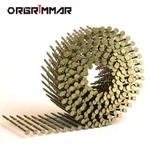
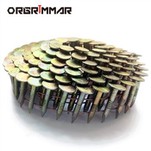
Screws are one type of fastener, and the usage standards include product names, materials, strength grades, specifications, and surface treatments.
1. In terms of product types, the bearing capacity of hex head screws is relatively large, the bearing capacity of hexagon socket screws is relatively small, and the torque of cross-recessed screws is even smaller. In the supporting use of products, it is generally recommended that the selection grade of screws is a little higher than that of nuts.

Wood Screws

Hexagon Socket Screws
2. The material grade of the product. Here we mainly talk about the carbon steel commonly used for screws. According to the level of carbon content, we can divide them into C1008, C1035, C1045, and SCM435. The higher the carbon content, the harder the material and the screws above grade 8.8 are high-strength screws.
3. When the same material is heat treated, the higher the hardness, the worse the toughness. Heat treatment is required for electroplating grade 8.8 and above. At present, there are two kinds of heat treatment: high-strength screws need quenching and tempering heat treatment, that is, the hardness of the screw from the inside to the outside is uniform; self-tapping screws need carburizing heat treatment, that is, the surface of the screw is infiltrated with a layer of hard carbon, but the inside is soft.
4. For specifications, such as M4x8, the outer diameter of 4 fingers is 4mm, and the effective length of 8 fingers embedded in the loaded object is 8mm. Generally, the countersunk head screw is loaded with the total length, while the pan head cross-drive screw does not include the head size.
5. In general, if the hardness is greater than 32HRC, there is a risk of hydrogen embrittlement in electroplating. Hydrogen embrittlement means that when the product is pickled, H+ enters the metal to form bubbles, and the screw will not break when it is used, and it will break after about 24 hours. Therefore, screws with a risk of hydrogen embrittlement need to be dehydrogenated after plating.