


Standard threads are coarse threads, while fine threads are relative to coarse threads. Under the same nominal diameter, the number of threads per inch varies, indicating that the pitch varies and is small.
1. Coarse Thread
The term "coarse thread" actually refers to the standard thread. Unless otherwise specified, the stainless steel screws and other fasteners we typically purchase have coarse threads.
The coarse thread has high strength and good interchangeability, and there are standards to compare, so in general, the coarse thread should be the best choice.
In comparison to a fine thread: due to the large pitch, large thread lift angle, and poor self-locking, it is necessary to install anti-loose washers, self-locking devices, etc. in the vibration environment; the advantage is that it is easy to disassemble and assemble, and the matching standard parts are complete, easy to interchange; the coarse thread is not required to mark pitch, such as M8, M12-6H, M16-7H, etc., and is mainly used for connecting threads.
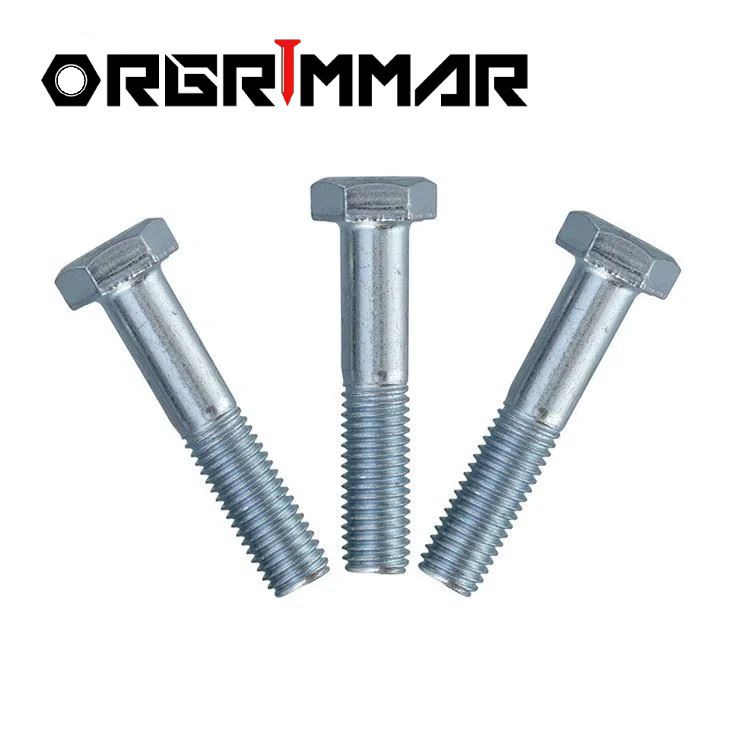
2. Fine Thread
Definition: Fine thread and coarse thread are just the opposite. They are specified to supplement the special use requirements that the coarse thread cannot meet. The fine thread also has a pitch series. The pitch of the fine thread is smaller, so its characteristics are more conducive to self-locking, anti- Looseness and the number of teeth can reduce the effect of leakage and achieve the effect of sealing. On some precise occasions, fine-toothed stainless steel screws are more convenient for precise control and adjustment.
Disadvantages: The tensile value and strength are relatively coarse and low, and the thread is easy to damage. It is not recommended to disassemble and assemble multiple times. The matching nuts and other fasteners may be equally accurate, and the size is slightly wrong, which is easy to damage the screws and nuts at the same time.
Application: Fine thread is mainly used in metric pipe fittings of hydraulic systems, mechanical transmission parts, thin-walled parts with insufficient strength, internal parts limited by space, and shafts with high self-locking requirements. The pitch of the fine thread must be marked to show the difference from the coarse thread

3. How to choose coarse thread and fine thread?
Coarse thread and fine thread screws are used for fastening.
Fine-toothed screws are generally used to lock thin-walled parts and parts that have high requirements for anti-vibration. The fine thread has good self-locking performance, so the ability to resist vibration and loosening is strong, but due to the shallow depth of the thread, the ability to withstand greater tension is worse than that of the coarse thread.
When no anti-loosening measures are taken, the anti-loosening effect of fine thread is better than that of coarse thread, and it is generally used for thin-walled parts and parts with high requirements for anti-vibration.
When used for adjustment, the fine thread is more advantageous. Disadvantages of fine thread: It is not suitable for application on materials with excessively thick tissue and poor strength. When the tightening force is too large, it is easy to slip.


